DuoMix
- 4.5
- Rating
- 5.00M
- Installs
- Free
- Price

 Analysis by App-foxy
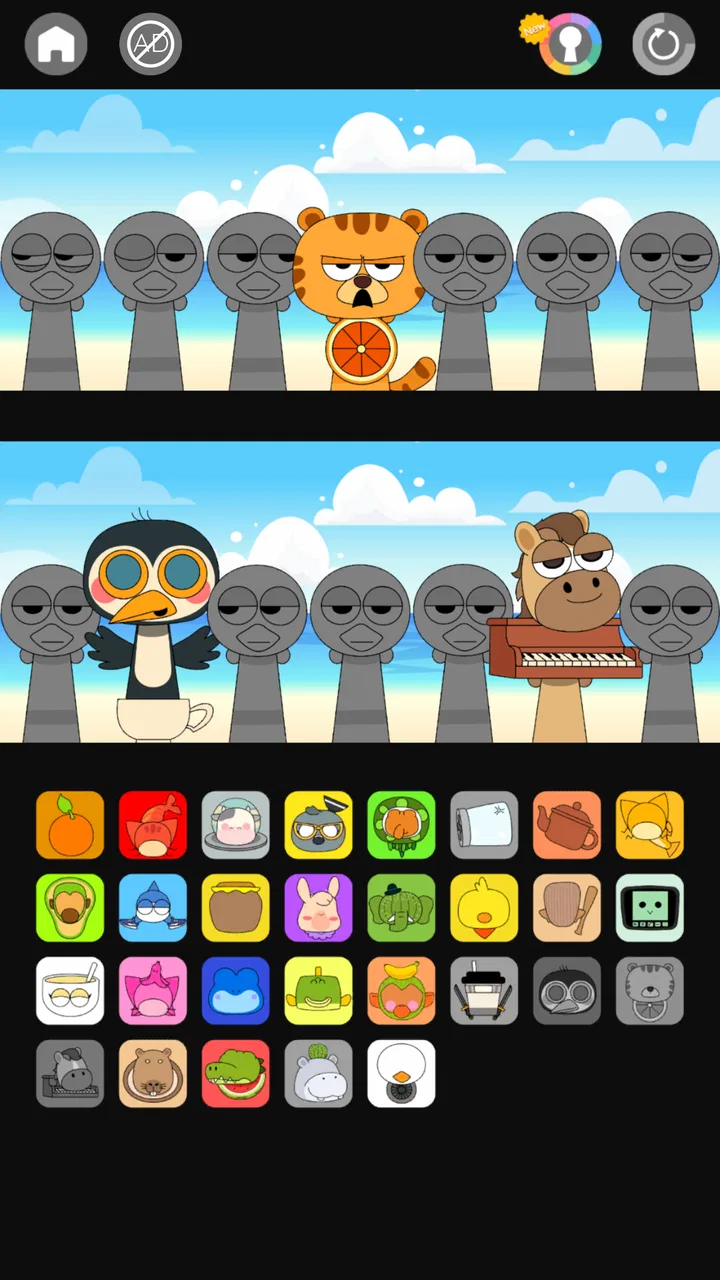
I went into DuoMix expecting a light music toy, but its appeal became clearer after a few rounds: the fun comes from making a small musical decision, hearing the result immediately, and then wanting to try the same idea with a different combination. It is a free music game from MUSIC HERO, built for quick experimentation rather than serious production. The presentation leans into a spooky mood, yet the basic pleasure is simple enough to understand within moments.
The important distinction is that this is not a full digital audio workstation and it is not trying to replace a conventional rhythm game. I would describe it as an interactive beat-making playground. You arrange or combine musical elements, listen to how they sit together, and decide whether the result feels satisfying enough to continue. That makes it approachable for casual players, younger users who enjoy sound and visual interaction, and anyone who wants a short creative distraction without learning a complicated interface first.
After spending time with it, I found the strongest reason to return was not a long progression system or a difficult challenge. It was the immediate feedback. A choice produces a sound, the sound changes the mood, and that change encourages another choice. The loop is small, but it is easy to pick up during a break, before bed, or when I want something more active than listening to music and less demanding than a traditional game.
You May Also Like

 Blood Strike: 2.5 Anniversary
Blood Strike’s Loadouts Turn Every Drop Into a Tactical Gamble
A close look at Blood Strike’s custom loadouts: how fast access to signature weapons reshapes its battle royale rhythm, rewards preparation, and narrows the gap between fights.

 Pandora - Music & Podcasts
Pandora’s Music Is Easy to Start, but Harder to Recover
Pandora’s strength is its low-effort path from a seed to a station. Its weak spot is how much confidence it asks you to place in connection, setup, and quiet recovery.

 8 Ball Pool
 Is Built on Rivalries, Rematches, and Routine
A close look at the rivalries, rematches, shared routines, and unanswered safety questions that turn a quick pool match into a persistent mobile community.

 Samsung Music
’s Quiet Strength Is Playing What You Already Own
Its reach comes less from spectacle than from dependable access to a personal library. That simplicity is both the app’s strongest retention engine and its ceiling.

 AccuWeather: Weather Radar
AccuWeather Review: A Quick, Clear Forecast for Everyday Decisions
For everyday plans, the best forecast is the one you can understand quickly. AccuWeather makes rain timing, radar, and local conditions easy to act on, with a few trade-offs.

 Hill Climb Racing
Why Hill Climb Racing Still Turns Crashes Into One More Run
A tiny car, a bumpy hill and one more upgrade: Hill Climb Racing keeps resurfacing because its simple chaos makes every near-miss feel personal.
More From Our News Desk



How the first action turns into a musical idea
The opening experience is deliberately direct. Rather than asking me to study a long tutorial, DuoMix gets me toward the central interaction quickly: choose something, combine it, and hear what happens. That first action matters because the game’s appeal depends on reducing the distance between intention and sound. If I tap because I want a darker beat or a busier texture, I receive an audible response instead of waiting through menus or setup screens.
That simplicity is a genuine strength for a free mobile game. I can hand it to someone who has never used a music-making app and they can understand the basic idea without knowing terms such as tempo, layering, or arrangement. The spooky styling gives the choices a recognizable personality, while the music-making focus keeps the experience from becoming just another menu-driven collection game.
I also like that the first action feels creative without demanding that I be musically trained. In a conventional beat-making application, I might need to choose instruments, place notes, adjust timing, and balance levels before hearing anything worthwhile. Here, the interaction is closer to selecting building blocks and judging the combination by ear. That makes the game a better fit for spontaneous play than for someone who wants precise control over every note.
There is a trade-off, though. The same accessibility that makes the first few minutes welcoming can make the experience feel limited to experienced musicians. If you already use a sequencer or a serious loop workstation, you may find the available decisions too guided. DuoMix works best when I accept its boundaries and treat the available sounds as a playful palette rather than expecting an open-ended studio.
The feedback rhythm is the real hook
Once I make a choice, the game’s feedback arrives through the sound and the changing overall feel of the mix. That response is what turns a simple tap into a decision. I am not merely collecting items or moving through a static checklist; I am listening for whether the new combination improves the atmosphere. When it works, the result feels like a tiny musical discovery, even if I created it in only a few seconds.
The feedback also gives the game a useful rhythm. I make an adjustment, listen, compare it with what was already playing, and decide whether to keep building or change direction. This is a more relaxed pace than a strict rhythm game, where missing an input can immediately punish me. It is also more active than a passive music player because my choices shape what I hear next.
One practical technique I found helpful was to resist changing several elements at once. If I alter everything immediately, I lose track of which decision improved the mix. Changing one part, listening for a moment, and then deciding whether to keep it gives the game more depth than rapid tapping. This is one of the better ways to make a short session feel intentional rather than random.
Another useful approach is to listen at a moderate volume instead of judging only by the visual response. The game is about combinations, so the most interesting difference may be in how layers sit together rather than in a single dramatic animation. I found that taking a brief pause after each change helped me notice whether a sound added contrast, filled an empty space, or simply made the mix busier.
This feedback loop is especially suitable for casual use. Imagine waiting for a friend, taking a short break from studying, or sitting on public transport with a few spare minutes. I can start without preparing a project, make a handful of choices, and stop when the result feels complete. It does not require the commitment of learning a full music app, and it does not demand the constant concentration of a competitive rhythm title.
What counts as a reward here
The reward in DuoMix is primarily auditory and creative. A satisfying combination gives me a small sense of ownership: I made this version of the beat, and it sounds different because of my decisions. That reward is modest, but it is immediate, which is why another session can begin so easily. I do not need to wait for a long unlock path before receiving something enjoyable.
The spooky theme adds another layer to that reward. It gives the sounds and combinations a particular atmosphere, so the result feels more distinctive than a completely neutral beat toy. I would not call it frightening in the way a horror game is frightening; the mood is more playful and stylized. That makes it approachable for users who enjoy seasonal or mysterious presentation but do not want suspense, combat, or a demanding story.
For children and teenagers, the creative reward may be more attractive than a score. The content rating is Teen, so parents should consider whether the tone and presentation suit the individual player, but the core activity is easy to understand. I would recommend supervision for younger users not because the interaction is complicated, but because the age classification should be taken seriously rather than treated as a guarantee that every child will enjoy the theme.
There is also a social use case, even though I would not treat the game as a replacement for a shared music platform. Two people can take turns suggesting combinations and judging which version sounds better. That turns a solitary loop into a small collaborative activity: one person chooses a direction, the other reacts, and both can compare the result with the previous attempt. It is a simple way to make the game more engaging when playing beside a friend.
The limitation is that a reward based on sound can become less powerful if I am looking for clear long-term goals. Players who need levels, competition, character development, or a substantial campaign may run out of motivation. The game’s satisfaction comes from experimentation, not from a large external achievement structure. That is not a flaw for its intended style, but it is an important reason not to confuse it with a conventional progression-heavy game.
Why the reset makes another session tempting
The reset is part of the appeal rather than an interruption. After I have explored one combination, starting again gives me a clean opportunity to test a different mood. Because the sessions are built around quick decisions, I do not feel that I am abandoning a major project when I return to the beginning. I can treat each attempt as a new musical sketch instead of protecting a complicated arrangement.
This makes the game unusually easy to revisit. A first session might be about discovering how the elements interact. A later session can focus on making the mix darker, lighter, busier, or more restrained, depending on what the available choices encourage. The reset creates a reason to replay because I am not simply repeating a solved puzzle; I am checking whether a different path produces a more pleasing result.
My best advice is to give each restart a small purpose. Instead of tapping through the same pattern, decide that the next attempt will prioritize a strong opening, a less crowded sound, or a more unusual combination. This turns repetition into comparison. It also helps reveal whether the game offers enough variety for your taste, because you are actively testing its creative range rather than merely replaying the first successful arrangement.
At the same time, users should expect the reset to feel lightweight. This is not the right game if you want a persistent recording project that grows over many days. Someone searching for detailed export tools, advanced editing, or a library designed for professional production would be better served by a dedicated music application. DuoMix is more like a pocket sketchbook: useful for quick ideas and playful experiments, but not intended to become a full studio archive.
That distinction answers one question many potential players will have: can it replace a normal music-making app? In my view, no. It can introduce the pleasure of layering sounds and making musical choices, but its guided nature is also what keeps it accessible. Choose it when you want immediate interaction and a themed game loop; choose a conventional production app when control, recording, editing, and long-term project management matter more.
Everyday play, device fit, and practical expectations
DuoMix is free to start, which makes it easy to test without committing money first. Optional in-app purchases are listed at $4.99 per item, so I would approach the game with a simple rule: enjoy the free experience first and only consider spending if the extra content genuinely adds value to the way you play. The price structure is worth remembering because a short creative game can feel very different once optional purchases become part of the decision-making.
The game is available for devices running Android 7.0 or later, so it is not restricted to only the newest phones and tablets. Even so, the quality of the experience will depend on the device’s audio output, screen size, and general responsiveness. On a small phone, the interaction remains convenient, but headphones or a decent speaker can make it easier to judge the layers than a weak built-in speaker.
For a realistic daily scenario, I could open it during a ten-minute lunch break, make one arrangement, listen carefully, and then restart with a different idea. I would not need to remember a complicated control scheme when returning later. That low commitment is one of its strongest practical qualities. It fits between a music player and a full game: active enough to hold my attention, but compact enough not to take over the day.
The game’s reception also suggests that it has found an audience. It carries an average rating of 4.5 from around 71 thousand ratings, and it has passed 5 million installs. Those figures do not determine whether it suits me, but they do make it easier to see the game as an established casual choice rather than an obscure experiment. The developer is MUSIC HERO, and the current version is 7.10.
It was released on November 29, 2024, and the listing shows 531 reviews. I mention the release timing because the game still feels like a relatively focused concept rather than a huge platform with years of accumulated systems. That can be positive if I want something easy to understand, though players expecting a vast catalog of modes may prefer a more mature music game with a wider structure.
Where it sits beside other music games
Compared with a standard rhythm game, DuoMix gives me more freedom to listen and adjust rather than demanding perfect timing against a scrolling track. That makes it less stressful and more exploratory. The trade-off is that it may not provide the same adrenaline, mastery curve, or competitive satisfaction as hitting notes in time while a song progresses.
Compared with a music production app, it is much easier to begin. I do not have to think about technical arrangement decisions before hearing something. The cost of that convenience is precision. A producer who wants to tune individual notes, shape a detailed structure, or manage a serious recording will quickly find a dedicated workstation more suitable.
Compared with a passive playlist or ambient sound app, it gives me a reason to interact. I am not simply receiving a finished track; I am testing combinations and responding to the result. That makes it a better choice when I want a tiny creative activity, but a worse choice when I only want uninterrupted background audio.
The most non-obvious strength is how well it occupies the middle ground. Many mobile music products are either toys with almost no decision-making or serious tools that require patience. DuoMix gives me enough control to feel involved while keeping the consequences of each action easy to understand. Its weakness is the same middle position: users at either extreme may feel underserved. Beginners may enjoy it immediately, while advanced musicians may want more control than the game intends to provide.
Who should install it, and who should skip it
I would recommend DuoMix to players who enjoy sound, visual themes, and short creative loops. It is particularly suitable for someone who wants to experiment without reading a manual, or for a casual player who likes replaying a compact activity to see whether a different combination feels better. The free entry point makes it reasonable to try, and the Teen rating gives parents a clear reminder to consider the intended audience before handing it to a younger child.
I would be more cautious about recommending it to someone who needs a complete music-making workflow. If your goal is to write a song, record vocals, export a finished project, or control every musical detail, this game is not the efficient choice. A dedicated audio tool will be more useful, even if it takes longer to learn. Likewise, competitive rhythm-game fans may miss the pressure of timing-based scoring and the feeling of improving against a measurable challenge.
Players who dislike spooky presentation should also think twice. The theme is central to the game’s identity, not a minor decoration that can be ignored. If you prefer realistic instruments, bright presentation, or a neutral interface, the atmosphere may feel less appealing over time. On the other hand, anyone who enjoys playful darkness without wanting a full horror experience may find the style a good match.
One final practical question is whether the game is worth returning to after the novelty fades. My answer is yes, but only if you enjoy comparing musical combinations. The replay value comes from the action-feedback-reset cycle: make a choice, hear the change, decide whether the result works, and begin again with a new intention. If that process feels rewarding, the compact design works in its favor. If you need constant new objectives, the same simplicity may eventually feel repetitive.
My verdict on the complete loop
DuoMix succeeds because its core loop is easy to feel. I take a first action, receive an immediate musical response, enjoy the small reward of shaping the mix, and then reset because another combination might sound better. None of those steps is complicated on its own, but together they create a pleasant reason to keep experimenting for one more session.
I appreciate that it does not pretend to be a professional studio or a demanding rhythm contest. Its value is narrower and more honest: it is a themed, interactive music game for quick creative play. The experience is strongest when I use it as a musical sketchpad, share the decision-making with a friend, or explore it during a short break. It is weaker when I expect deep progression, detailed editing, or a large competitive framework.
For me, the deciding question is not whether it contains enough systems to occupy every kind of player. It does not need to. The better question is whether I enjoy hearing the consequence of each small choice. If the answer is yes, the free download is easy to justify, and the optional $4.99 items can be considered carefully rather than treated as necessary for the basic idea.
My recommendation is simple: try it if you want a low-pressure way to mix spooky-sounding ideas and you value instant feedback more than technical control. Skip it if you are searching for a full music workstation or a score-driven rhythm challenge. Within its focused role, MUSIC HERO has made a game that is approachable, replayable in short bursts, and specific enough to give casual music-making its own personality.
FAQs for DuoMix
01What is DuoMix and what does it offer?
DuoMix is a music mixing app available for both Android and iOS platforms. It allows users to mix tracks, add effects, and create professional-level audio projects with ease. Featuring a user-friendly interface, it’s suitable for both beginners and experienced DJs, offering a wide range of tools and effects.
02Is DuoMix free to use, or does it require a subscription?
DuoMix offers a free version with basic features, but for enhanced functionality, including advanced mixing tools and effects, users can opt for a premium subscription. The subscription is available on a monthly or yearly basis, providing access to exclusive content and updates.
03What are the system requirements for DuoMix?
DuoMix requires Android 8.0 or iOS 12.0 and above to run smoothly. The app is optimized for both smartphones and tablets, ensuring a seamless experience. To avoid performance issues, ensure your device has sufficient storage and RAM available before installation.
04Can I use DuoMix offline, or do I need an internet connection?
DuoMix can be used offline for mixing and editing tracks that are already downloaded onto your device. However, an internet connection is required to access online features, such as downloading new effects, syncing projects, and sharing your creations on social media platforms.
05How does DuoMix ensure the quality of the audio produced?
DuoMix uses advanced audio processing technology to ensure high-quality sound output. It supports various audio formats and provides tools for precise editing and mixing. Users can export their projects in lossless formats, ensuring the final product maintains its original quality.
Pros
- Intuitive user interface for easy navigation.
- Wide variety of music genres available.
- Offline mode for uninterrupted playback.
- Seamless integration with smart devices.
- Personalized playlists based on preferences.
Cons
- Limited free version features.
- Occasional app crashes reported.
- Subscription needed for ad-free experience.
- Requires constant updates for new features.
- Some tracks unavailable in certain regions.

DuoMix
Gallery